• Want to receive the latest contracting news and advice straight to your inbox? Sign up to the ContractorUK newsletter here. Every sign up will also be entered into a draw to WIN £100 Amazon vouchers!

Java Platform Any Good?

5.00 star(s)
I think the argument that it takes longer to write websites in java is one based on ignorance of the technology, you can write apps in exactly the same manner as you can with PHP if you so desire, almost matching line for line, file for file. Nobody does though, for a reason.

I do readily admit that more often than not clients java web implementations are fookin brutal to the point creating a simple single page can take days, java is an expressive language and they often let total zoomers near the controls.

Java was meant for embedded systems, all the rest has been feature creep

J++ was abysmal, but C# is what Java should have been
 
Django is extremely good, and it means you/the developers get to work in Python, which is much better than working with PHP or Java.

Python apart from the crazy indentation, is a good scripting language. Not just with frameworks like Django but also in .Net

For instance Umbraco with C# and Python makes for a great open source .Net CMS
 
Python apart from the crazy indentation…

Nothing crazy about the indentation. Python uses indentation to delimit blocks. This is no stranger than using some arbitrary set of brackets that happened to be unused for any other purpose and were available on the keyboard of a terminal in common use in the early 1970s to delimit blocks.

If Kernighan and Ritchie were creating C (whose syntax Java and many other languages that copy it, such as C#, use) today, they might well use any of the many characters available in Unicode to delimit blocks. I quite like the idea of 🚀 and 🐔, or - if arbitrarily chosen delimiters must have some cultural association - ☞ and ☜.
 
Perhaps have a look at the play framework? That way you get the performance of the JVM + the option to write in scala instead.
 
The benchmarks I've seen testing multiple backend frameworks usually show a pure Java Servlet API knocks spots off everything else, often by several orders of magnitude.

In my experience the speed of the framework or type of code that is used to write an application is not the game changer for the finished product. What actually makes a difference is having skilled developers who can think outside of their dev machine and realise their code is going onto a tiered platform with separate DB server, app and presentation tier, plus integrating with other applications that are not on the same machine. The common issue is how data is moved across the network and manipulated. Too often I find the developers have used noddy app tier routines that pull 'all' rows out of a number of DB tables or a web service and then manipulate it locally. That's fine on their dev environment where they have a small amount of sample data, but not with real volumes of data.
 
Too often I find the developers have used noddy app tier routines that pull 'all' rows out of a number of DB tables or a web service and then manipulate it locally. That's fine on their dev environment where they have a small amount of sample data, but not with real volumes of data.

Are you saying the old days when your multi-tier application called stored procedures which returned only the data you wanted was better than the current approach.

Perish the thought......
 
Nothing crazy about the indentation. Python uses indentation to delimit blocks. This is no stranger than using some arbitrary set of brackets that happened to be unused for any other purpose and were available on the keyboard of a terminal in common use in the early 1970s to delimit blocks.

If Kernighan and Ritchie were creating C (whose syntax Java and many other languages that copy it, such as C#, use) today, they might well use any of the many characters available in Unicode to delimit blocks. I quite like the idea of 🚀 and 🐔, or - if arbitrarily chosen delimiters must have some cultural association - ☞ and ☜.

I always think you can divide developers in two: those that could do algebra at school and so are comfortable with brackets and symbols, and those that couldn't and were probably better at English Lit. The former end up doing C++/Java/C#/Javascript and the latter end up using abominable languages with lots of redundant space and silly things like End If as two words, whilst insisting that they're "easier" and "faster to develop with". :suicide:

The particular problem with python is when you mix tabs and spaces. Which means you need a special editor, or set up your editor properly, which partly defeats the object of a scripting language: being able to easily edit it.
 
Are you saying the old days when your multi-tier application called stored procedures which returned only the data you wanted was better than the current approach.

Perish the thought......

Its not just that, there has to be some balance between the two. Unfortunately the balance doesn't often happen with in-house applications, or in the early days of 'new' commercial products (I hope the OP is listening). Its either all at the data tier or all in the application. I still see apps that have been written by a bunch of SQL developers who do everything on the data tier which then don't scale, not to mention many other annoyances.
 
Nothing crazy about the indentation. Python uses indentation to delimit blocks. This is no stranger than using some arbitrary set of brackets that happened to be unused for any other purpose and were available on the keyboard of a terminal in common use in the early 1970s to delimit blocks.

The one place Python indentation catches me out at the moment is when copying and pasting bits of code off web sites.

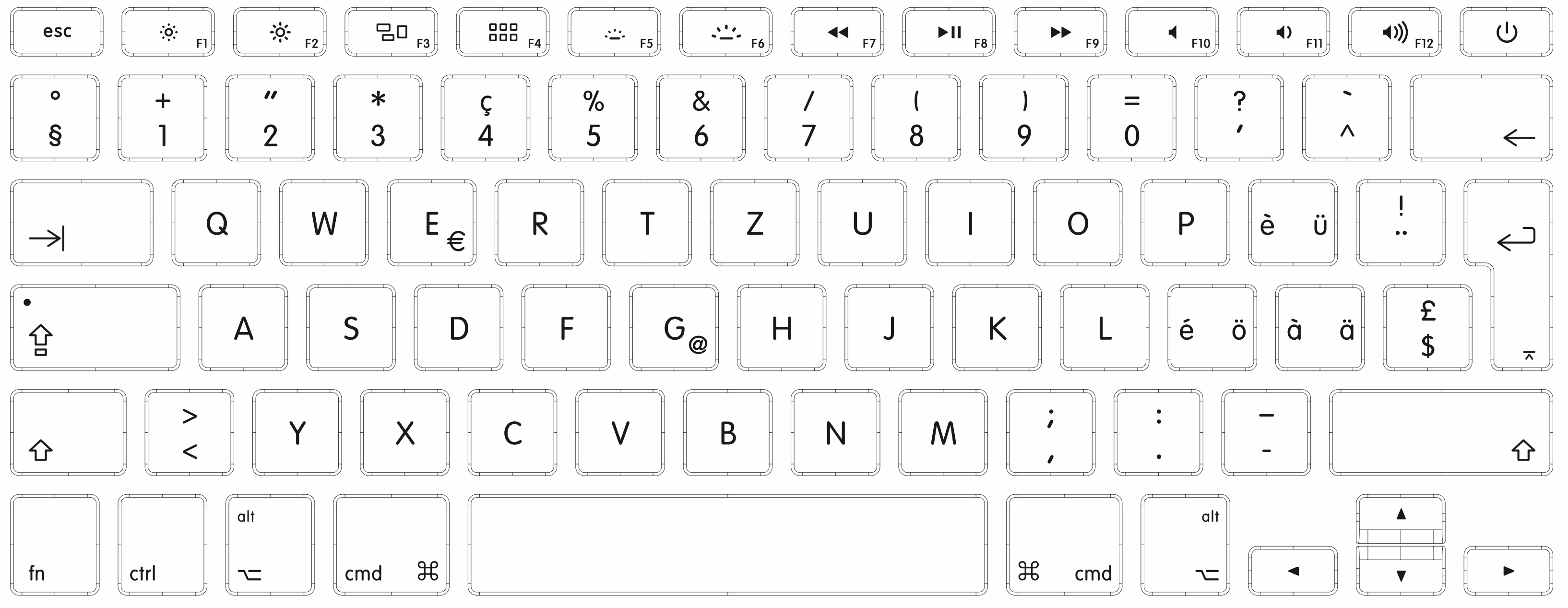
Being lumbered with Swiss keyboard layouts especially the abortion created by Apple

Swiss%20French%202.gif


Go on, guess where [ , ], {, } are...

Hint: backslash is alt-shift-7

I am only too happy to use indentation rather than curly or square brackets (oops Python fails that one with the square brackets).

If Kernighan and Ritchie were creating C (whose syntax Java and many other languages that copy it, such as C#, use) today, they might well use any of the many characters available in Unicode to delimit blocks. I quite like the idea of 🚀 and 🐔, or - if arbitrarily chosen delimiters must have some cultural association - ☞ and ☜.

US layout keyboards are a handy accessory when dealing with their legacy.
 

Advertisers

Back
Top