Visitors can check out the Forum FAQ by clicking this link. You have to register before you can post: click the REGISTER link above to proceed. To start viewing messages, select the forum that you want to visit from the selection below. View our Forum Privacy Policy.
Want to receive the latest contracting news and advice straight to your inbox? Sign up to the ContractorUK newsletter here. Every sign up will also be entered into a draw to WIN £100 Amazon vouchers!
You are not logged in or you do not have permission to access this page. This could be due to one of several reasons:
You are not logged in. If you are already registered, fill in the form below to log in, or follow the "Sign Up" link to register a new account.
You may not have sufficient privileges to access this page. Are you trying to edit someone else's post, access administrative features or some other privileged system?
If you are trying to post, the administrator may have disabled your account, or it may be awaiting activation.
The UK borrowed and borrowed followed by a depression.
No, we sorted out the problem and got screwed by our European allies (notably the French) in the aftermath. The only depression in the offing is that which follows the reading of one of your drivel filled missives...
Someone else tried that in 1939, remind me what happened...
Do you mean who I think you mean? If so...
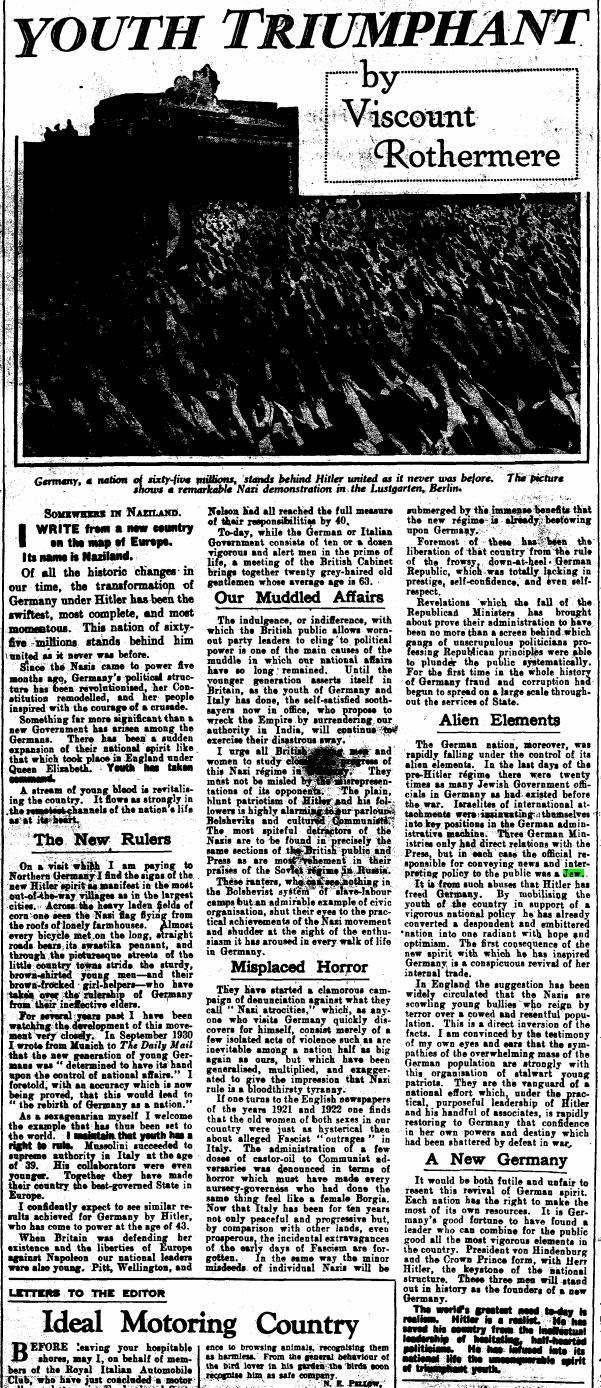
Prior to 1938, while Hitler tried to court Britain into an alliance, his propaganda praised the British as proficient Aryan imperialists.
....
Initially, the aim of Nazi foreign policy was to create an Anglo-German alliance, so before 1938, Nazi propaganda tended to glorify British institutions, and above all the British Empire. Even regarding it, along with France, as "decadent democracies", Goebbels set out to court them.
Typical of the Nazi admiration for the British Empire were a lengthy series of articles in various German newspapers throughout the mid-1930s praising various aspects of British imperial history, with the clear implication that there were positive parallels to be drawn between British empire-building in the past and German empire-building in the future. The esteem in which the British Empire was held can be gauged by the fact that the lavish adoration heaped upon Britain's empire was not matched by similar coverage of other empires both past and present. An example of this sort of coverage was a long article in the Berliner Illustriete Zeitung newspaper in 1936 extolling the British for "brutally" resolving the Fashoda crisis of 1898 in their favour with no regard for diplomatic niceties. Another example of Nazi anglophilia included a series of widely promoted biographies and historical novels commemorating various prominent "Aryan" figures from British history such as Cromwell, Marlborough, Nelson, Rhodes, Wellington, and Raleigh.
A particular theme of praise was offered for British “ruthlessness” in building and defending their empire, which was held as a model for the Germans to follow. Above all, the British were admired as an “Aryan” people who had with typical “ruthlessness” subjected millions of brown- and black skinned people to their rule, and British rule in India was held up as a model for how the Germans would rule Russia, through as the historian Gerwin Strobl pointed out that this parallel between German rule in Russia and British rule in India was only made possible by the Nazis’ ignorance of how the British actually ruled India.
Perhaps more importantly for gauging the Nazi regime's pro-British feelings in its early years was the prominence given to Englandkunde (English studies) within German schools and the lavish praise offered to British youth organizations as a model within the Hitler Youth.
Martin Schulz would seem to be the U.K.’s worst nightmare. A die-hard federalist who never hid his antipathy for Britain’s anti-EU faction in the European Parliament







Leave a comment: