
I thought they just dropped the control rods back in and the reactor stopped producing heat?
-
-
There is lots of residual activity that takes time to wind down - the reactor still needs to be cooled off during this period.Originally posted by minestrone View PostThe Mods stole my post count!Comment
-
This is a nightmare of surreal proportions. Record breaking earthquakes and tsunamis, nuclear reactors blowing up and now radioactive material raining from the sky. Land sea and air.
What next?Comment
-
I gather the backup systems were damaged (generators, etc) by the quake too. D'oh!Originally posted by Pickle2 View PostComment
-
There are four buildings but according to Wikipedia six reactors with two more under construction, so it's not clear exactly what was in that building. The frame of that building looks almost intact although whatever outer panels were attached have gone, they seem to be just tiles or corrugated metal or something. They aren't part of the containment vessel though.
The actual containment vessel is a thick usually reinforced concrete thing designed to contain radiation even if the reactor vessel within is damaged by a meltdown. If that is breached then there could be really serious radiation leakage...
They have just doubled the radius of the evacuation zone.Last edited by doodab; 12 March 2011, 10:35.While you're waiting, read the free novel we sent you. It's a Spanish story about a guy named 'Manual.'Comment
-
Unlikely it would take something like a mega quake to breach that babyOriginally posted by doodab View Post Knock first as I might be balancing my chakras.
Comment
-
Interesting speculative reason for the explosion given on BBC news is that a build-up of hydrogen exploded. Looking at the explosion on the video and the lack of a flame, or as much steam as one might expect from a steam pressure explosion, and that hydrogen burns invisibly, maybe that's got legs.Comment
-
Well it's designed to resist big quakes and nuclear meltdown and it seems to have worked, as did the ones at Miyagi which is much closer to the epicentre and did suffer a fire in a non-nuclear-reactor building.Originally posted by suityou01 View Post
The problems here seem to stem from the tsunami taking out the backup generators which drive the cooling system, and the resulting pressure build up + possible meltdown, which apparently could create a lot of hydrogen gas, which perhaps was vented along with the steam earlier.
It's all bad, anyway.Last edited by doodab; 12 March 2011, 10:45.While you're waiting, read the free novel we sent you. It's a Spanish story about a guy named 'Manual.'Comment
-
Ahem, so my 'best guess' is as follows:Originally posted by TimberWolf View Post
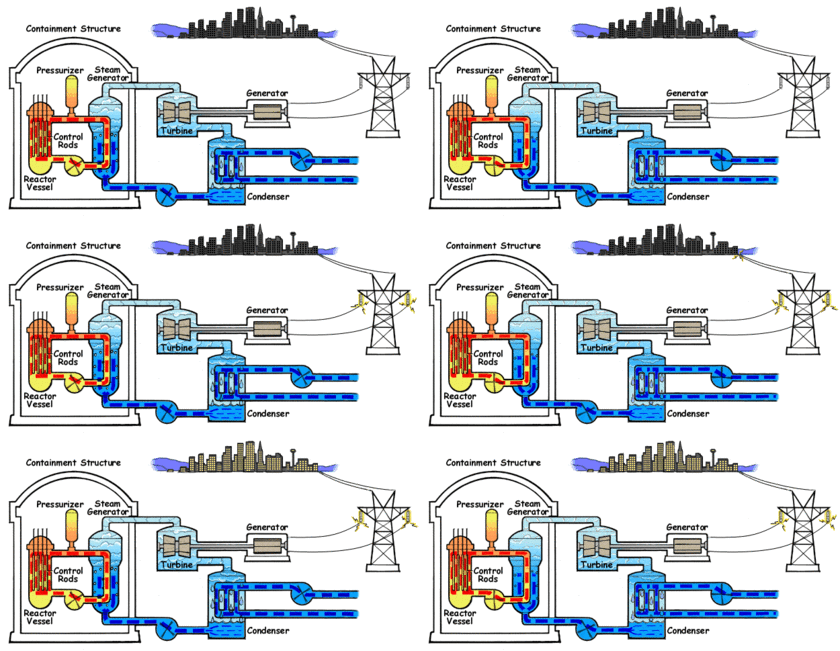
1) It's not a PWR it's a BWR (Boiling Water Reactor). http://en.wikipedia.org/wiki/Fukushi...ar_Power_Plant
2) Primary circuit (the red bit) probably hasn't been breeched (yet), but vented gases have exploded.
3) The concern would be whether they can cool the reactor before the fuel melts.
It's all very impressive, whatever happens..."I can put any old tat in my sig, put quotes around it and attribute to someone of whom I've heard, to make it sound true."
- Voltaire/Benjamin Franklin/Anne Frank...Comment
-
BBC just saying that actually history shows the most dangerous form of power production is hydro-electric, because if a dam bursts it tends to kill everybody in the villages underneath it. And for that matter, having a giant wind turbine fall on your house probably isn't good either.Will work inside IR35. Or for food.Comment




Comment