• Want to receive the latest contracting news and advice straight to your inbox? Sign up to the ContractorUK newsletter here. Every sign up will also be entered into a draw to WIN £100 Amazon vouchers!

Physics question - static equilibrium

5.00 star(s)
I think the first equation is wrong. Yes you have two right angled triangles, one with a hypotenuse of magnitude 12N, and one with 19N. To resolve the downward components of each, the downward force is using the angle adjacent to the hypotenuse. IIRC SOHCAHTOA, so

F=19 cos(a) + 12 cos(b)

Since the system is in equilibrium then

19 cos(a) = 12 cos(b)

(as you rightly pointed out).

Still absolutely no ******* clue how to solve 3 unknowns with 2 equations, just wanted to get your first equation right.

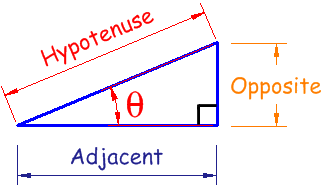
Eh? Both angles are adjacent to the hypotenuse. The opposite/adjacent thing refers to the angle we know. In this case we don't know any (apart from the right angles).
 
...and it turns out there was a piece of information missing. The diagram she was supplied with is a scale diagram... so she can measure the missing quantities. :mad
 
...and it turns out there was a piece of information missing. The diagram she was supplied with is a scale diagram... so she can measure the missing quantities. :mad

Never mind, I'm sure a few posters on this thread will be adding Advanced Trigonometry to their CV's now.:smokin

P.S. Isn't she supposed to do her own homework?
I blame the parents ........................
 
...and it turns out there was a piece of information missing. The diagram she was supplied with is a scale diagram... so she can measure the missing quantities. :mad

:freaky:

I was going to ask that - though it seems like cheating. I'd got as far as the equations above, but couldn't work out how to solve the angles. But do the angles add up? If you look at the angle from the opposite direction, do they make 180 degrees?

My old Technology O-level teacher was fond of telling us how we'd wake up screaming about Bow's Notation years on. That's where you draw forces as vectors on paper and then measure the angles and distances.
 
tumblr_inline_mthgsz9GLy1rrxv9q.gif


:eek:

Men in black.
 
Never mind, I'm sure a few posters on this thread will be adding Advanced Trigonometry to their CV's now.:smokin

P.S. Isn't she supposed to do her own homework?
I blame the parents ........................

We don't do the homework - we show her how she can work it out.

MiB.... :rollin:
 
Eh? Both angles are adjacent to the hypotenuse. The opposite/adjacent thing refers to the angle we know. In this case we don't know any (apart from the right angles).

Oooh spooky, there's an echo. :rolleyes:
 
Oooh spooky, there's an echo. :rolleyes:

Yes dear, but the opposite/adjacent thing isn't in relation to the hypotenuse, it's in relation to the angle you know - so your post was nonsense.

Here's a picture for you.

adjacent-opposite-hypotenuse.gif
 

Advertisers

Back
Top